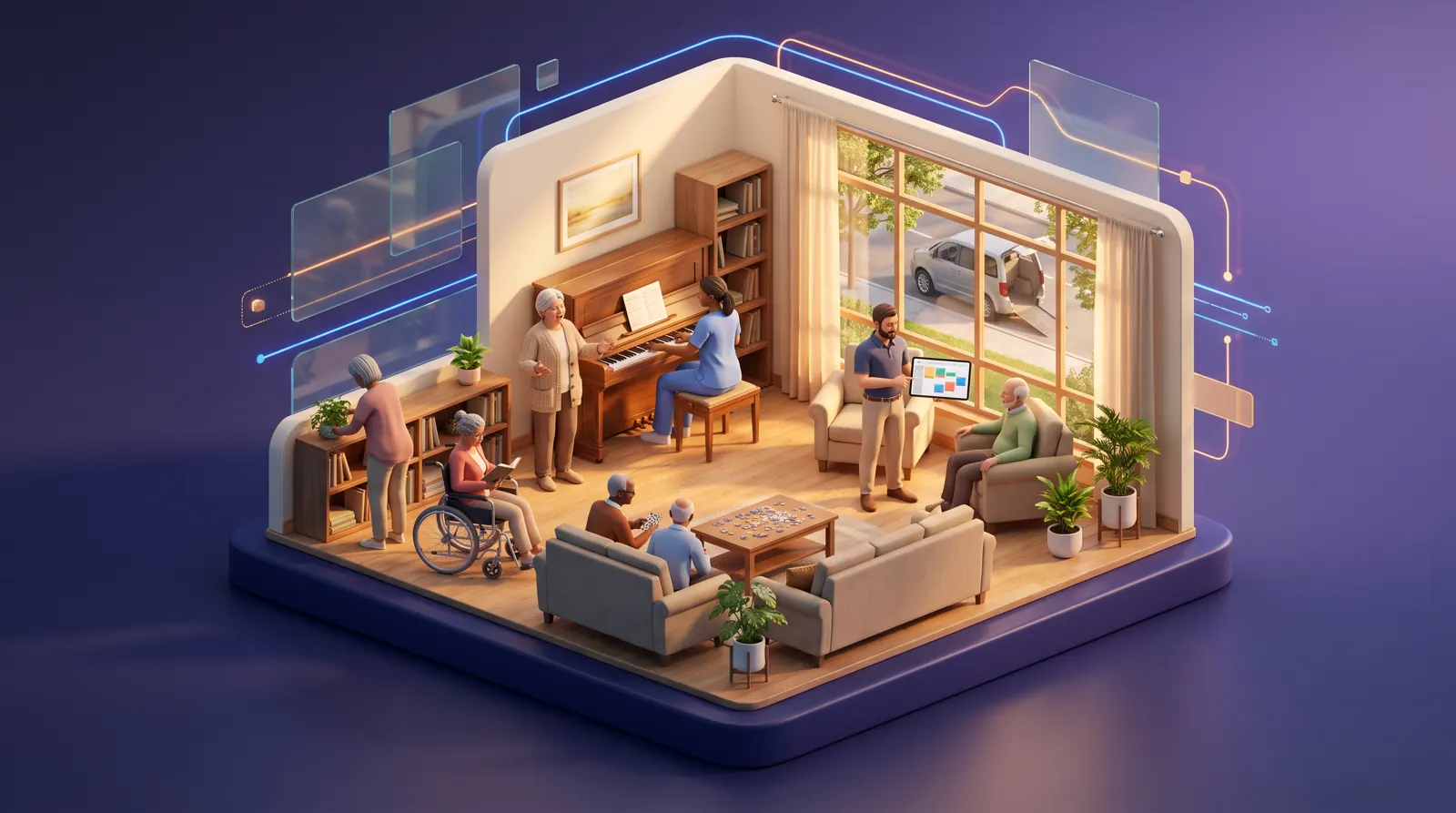
Senior care pressures are linked: a dawn call-out uncovers visits, a lapsed card sidelines a caregiver, families phone for news and a failed van lift strands appointments, yet each is handled by phone and paper.
A senior living community runs a small hotel, a restaurant, a care team and a transport service under one roof, and a home-care agency runs dozens of one-person shifts inside other people's homes. Both depend on frontline caregivers who are hard to hire and harder to keep, and both are judged by people who notice every missed visit: residents, adult children who often live far away, and state licensing surveyors.
The records that hold this together are scattered. Schedules live in one tool and a group chat, credentials in binders, visit notes on paper in a client's kitchen, activity attendance on clipboards, inspection dates on stickers and van bookings on a whiteboard. When a caregiver calls out at dawn or a surveyor asks for a training file, someone rebuilds the answer by hand while residents wait.
The work on this page is about daily living, not medicine: getting up, meals, company, activities, rides and equipment that works. The products stay on that operational side. Assessments, medication records and care decisions stay with licensed staff and the clinical systems they already use, and state electronic visit verification (EVV), service authorizations and billing stay in the systems that handle them today.