Industry solution

Semiconductors & Electronics

From wafer lot to shipped board, one connected picture of parts, tests and people

Shortages, SMT changeovers, yield, failure analysis, calibration and training, run by specialist products designed to work as one.

Products
8
Challenges
6
Concepts
15
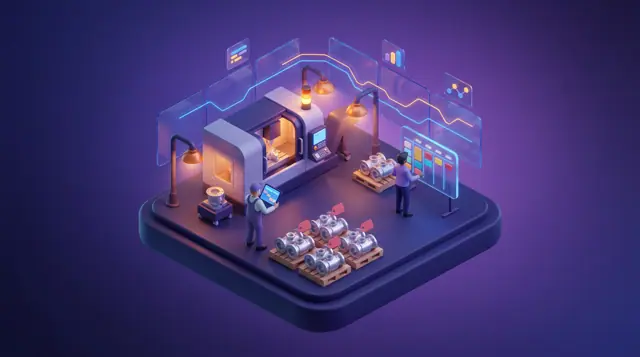
SMT line with a feeder cart, a technician checking a component reel and a wafer at a cleanroom pass-through
ManufacturedOps(opens ManufacturedOps in a new tab)LabsOfScience(opens LabsOfScience in a new tab)AssetHandler(opens AssetHandler in a new tab)CrewFoundry(opens CrewFoundry in a new tab)AdapterCloud(opens AdapterCloud in a new tab)BigConsole(opens BigConsole in a new tab)FluidGrids(opens FluidGrids in a new tab)MoveTheWheels(opens MoveTheWheels in a new tab)

The problem

Why building electronics is hard right now

Electronics makers juggle allocated parts, high-mix changeovers, yield data scattered across partners and testers, field returns and expiring qualifications, each in a system that cannot see the others.

An electronics maker's week is shaped by things it does not control. Distributors put parts on allocation, manufacturers issue end-of-life and change notices, and a single regulator or crystal can hold up a whole board. In a high-mix plant, surface-mount (SMT) lines change over several times a shift, and each changeover depends on the right reels, feeders, stencil, oven profile and setup technician being ready at the same moment.

Quality evidence is spread thin. Wafer sort results come from foundry and test partners, final test results for packaged parts come from assembly and test subcontractors, board and module test results sit on tester PCs, failure analysis notes live in shared folders, calibration certificates in binders and training records in a separate learning system. Customers expect traceability down to the reel, date code and wafer lot, fast containment when yield drops, and a documented 8D (eight disciplines) corrective action report when a unit comes back from the field.

This page describes a solution concept: how specialist Burdenoff products are designed to pass parts, test and people facts to one another on Burdenoff Workspaces, so a signal in one place becomes an action in another. The products are pre-launch, and the hand-offs shown here describe how they are designed to work together.

Who this is for

  • VP of Operations

    Shipping the build plan on time across high-mix lines, and walking into a customer audit with traceability and training records that hold up.

  • Supply chain and component engineering manager

    Seeing which builds a shortage or end-of-life notice will stop, and getting an approved alternate qualified before the line runs dry.

  • SMT process engineering manager

    Shorter, predictable changeovers: kitted feeders, clean stencils, the right oven profile and a qualified setup technician on every line.

  • Quality and reliability manager

    Containing a yield excursion by wafer lot and serial number, and closing each field return with a defensible 8D report.

  • Test and product engineering lead

    Yield by wafer, lot and tester in one place, and confidence that every tester runs the released program on calibrated instruments.

  • Safety and training coordinator

    Knowing who is cleared for the cleanroom, the rework bench and the chemicals in the failure analysis lab, before they walk in.

A day in the life

The story behind the solution

A week at a sensor module maker

Pellvane designs its own sensor chip, has it fabricated by a foundry and probed at wafer sort by a test partner, then attaches and wire-bonds the die in a small cleanroom and builds the finished modules on four surface-mount lines for industrial equipment makers. Nadia Farouk runs operations. This is one week in which almost everything that can drift, does.

  1. Monday, 7:20 a.m.

    The regulator goes on allocation

    Buyer Kenji Watanabe opens the week with a distributor notice: the 3.3-volt buck regulator on the SM-400 module has moved to a 38-week lead time and allocation. Three production orders over the next two weeks need it, and the reels on hand cover the first one. A second-source regulator sits on the approved manufacturer list, but nobody can say whether it was ever qualified on this board, and a broker is offering stock with a 2019 date code.

    How this is solved: Keep a component shortage from becoming a line-down
  2. Tuesday, 5:50 a.m.

    Line 2 loses three hours to one changeover

    The night changeover on Line 2, from the CTRL-220 controller board to the SM-400, ran nearly three hours. Feeder cart FC-07 was only half kitted, a tray of moisture-sensitive parts had passed its floor life and went to the bake oven, stencil ST-SM400-B was still at the washer and the first article failed on a nozzle nobody changed. The one setup technician qualified on the newer placement machine was covering Line 4. Process engineer Luis Carvalho finds out from the handover sheet.

    How this is solved: Win back the hours lost to SMT changeovers
  3. Wednesday, 10:15 a.m.

    The offset failures trace to one wafer lot

    Product engineer Priya Raman sees SM-400 modules failing offset calibration at functional test several times more often than usual. She pulls sort results from the test partner's portal, the functional tester logs from the line and a genealogy spreadsheet, and hours later sees the pattern: the failing modules carry die from wafer lot W4471, whose sort maps show a ring of marginal die near the edge. More than two thousand modules from that lot are in finished goods, one pallet is at the regional distribution hub, and six more W4471 wafers sit in die bank.

    How this is solved: Catch a wafer-lot yield excursion before modules ship
  4. Thursday, 2:30 p.m.

    Fourteen modules come back cold and intermittent

    An equipment maker returns fourteen modules that drop out intermittently in its cold-chamber test and asks for an 8D report within ten working days. Failure analysis lead Dmitri Volkov's team X-rays, probes and cross-sections the units and finds cracked ceramic capacitors near the board edge. Their notes, images and procedure versions sit in a shared folder, and linking the cracks to a cause on the floor means someone searching travelers by hand.

    How this is solved: Close a field return with evidence, not guesswork
  5. Friday, 9:00 a.m.

    FT-3 has been testing to last month's limits

    While looking into a retest request, test engineer Grace Oduya finds that functional tester FT-3 was reimaged on Tuesday night and has been running last month's test limits file, not the released revision, ever since. Nothing on the line said so. The same morning, the calibration lab returns FT-3's source-measure unit with an out-of-tolerance as-found reading, and metrology technician Tomás Ibarra starts working out which boards it measured since its last good calibration.

    How this is solved: Keep every tester on the released test program
  6. Friday, 1:30 p.m.

    An auditor asks who is cleared for the cleanroom

    During a customer quality audit, the auditor asks for gowning qualifications for everyone on the die-attach shift. Training coordinator Aisha Bello finds that an agency operator started in the cleanroom on Monday before her gowning check-off, and that the failure analysis technician who opened the acid cabinet for Thursday's decapsulation had a lapsed chemical-handling refresher. The learning system, the badge list and the shift roster each held part of the story, and none of them kept anyone out.

    How this is solved: Only qualified people in the cleanroom, at rework and in the lab

By Friday evening Nadia has seen the same pattern six times: the facts existed, but in the wrong place at the wrong moment. The challenges below show how specialist Burdenoff products are designed to put each fact in front of the person who needs it, while there is still time to act.

Challenges and how they are solved

6 problems, several products, one connected answer

Each challenge shows the problem as it happens, how the products are designed to hand work to each other, and the concepts that illustrate it. Share any challenge on its own.

Answers are in plain business terms. Choose Technical, or open any technical detail, to see how it works under the hood.

The problem

An allocation notice or end-of-life letter lands, and the same questions start every time: which boards use the part, which production orders need it and when, and does the approved manufacturer list name an alternate? Often it does, but the evidence that the alternate was ever qualified on this board sits in a former engineer's inbox. Broker stock with an old date code and an uncertain history starts to look tempting, and meanwhile the SMT schedule keeps pulling the last reels. By the time engineering, purchasing and planning agree, the line is already short.

What it costs

Lines stop mid-build, customers get late-ship notices, and buyers pay broker premiums or take counterfeit risk because the alternate was never qualified in time.

How the products work together

ManufacturedOps is designed to show every short part next to the orders it would stop and its approved alternates, with delivery dates from MoveTheWheels passed along by FluidGrids. Alternates never tested on this board go to LabsOfScience, where engineers run the agreed test and sign the results, and the planner releases the alternate once those results are in.

How it works — technical detail

Technical detail

ManufacturedOps is designed to explode each module's bill of materials against reels on hand and list every short part number beside the production orders it would stop. Approved alternates and lifecycle status are designed to be entered on the item master or brought in from the PLM export by a FluidGrids workflow. Revised ETAs for inbound shipments tracked in MoveTheWheels are designed to reach ManufacturedOps through a FluidGrids automation, so the schedule shows which orders a late delivery would starve. An alternate with no qualification on the affected board is designed to go to LabsOfScience as a qualification request. Test engineering runs the published protocol there and signs the results against that frozen version, and the signed result is designed to pass back so the planner can release the alternate for named orders, with who approved it and why on record.

The outcome it is designed for

Buyers and planners see a shortage as a list of orders at risk with a qualified path forward while there is still time to act, and an alternate is released on signed evidence, not on hope.

The concepts behind it

ManufacturedOps

Electronic Component Shortage and Alternates Board

Is designed to list each short part number with lifecycle status, the orders it would stop, its next receipt from MoveTheWheels and each approved alternate's qualification status.

Works with LabsOfScience, MoveTheWheels

The problem

In a high-mix plant, one changeover depends on half a dozen things owned by different people: reels still in receiving, moisture-sensitive parts close to or past their floor life, a stencil waiting on cleaning, nozzles and support pins to swap, an oven profile to load and a setup technician qualified on that placement machine. None of it shows up on one list. The line sits idle while each gap is found in turn, the first article fails for a reason that was avoidable, and the cause ends up as a note on a handover sheet that nobody will add up.

What it costs

Changeovers eat into available line time, first-article failures add rework, and the same causes repeat because nobody sees them ranked across lines and weeks.

How the products work together

Before a line changes over, ManufacturedOps is designed to show one checklist: parts kitted, moisture-sensitive parts within their time limit, stencil clean, oven program ready. AssetHandler adds when stencils and feeders are due for service, and CrewFoundry shows which setup technicians are cleared for that machine this shift. Every delay is recorded with its reason, so repeat causes stand out.

How it works — technical detail

Technical detail

ManufacturedOps is designed to lay out the next changeovers for each SMT line on a timeline, each with a readiness checklist: feeder kit verified, moisture-sensitive parts within floor life, stencil released, oven profile loaded and first-article status. AssetHandler is designed as the tooling and instrument register shared by the plant and the failure analysis lab, covering custody, calibration and usage-based service, while ManufacturedOps keeps machine downtime and work-center maintenance. AssetHandler's preventive maintenance schedule is designed to put stencil cleaning and feeder calibration due dates on the checklist, and CrewFoundry is designed to hand ManufacturedOps who is cleared on which placement machine this shift. Changeover delays are logged as downtime reasons in ManufacturedOps, so the weekly review ranks what actually cost the time.

The outcome it is designed for

Changeovers start with kit, tooling and technician confirmed, first articles are less likely to fail for avoidable reasons, and the weekly review sees changeover losses ranked by cause, not anecdote.

The concepts behind it

The problem

When modules start failing one functional test far more often than usual, the first question is whether the cause is a tester, a line or a wafer lot. Answering it means downloading sort results from a partner portal, exporting logs from each tester PC and rebuilding die-to-module genealogy in a spreadsheet, which can take most of a day. By the time the wafer maps show a pattern, modules built from the suspect lot are in finished goods or on a truck, and more wafers from the same lot are waiting in die bank for the next build.

What it costs

Suspect modules keep shipping and suspect wafers keep reaching die attach while engineers assemble data by hand, and containment turns into a recall across warehouses and customer sites.

How the products work together

FluidGrids gathers the partner's wafer results and the plant's own tester results, and BigConsole is designed to show them on one screen, with a map of each wafer, so a bad wafer lot stands out from a faulty tester. The partner can view that screen for a set time. ManufacturedOps holds back the lot's remaining wafers and lists every module built from it for MoveTheWheels to hold.

How it works — technical detail

Technical detail

A FluidGrids workflow, run on a schedule or by webhook when the test partner posts results, is designed to collect wafer sort results by lot and wafer and functional test summaries from the tester PCs, pull die-to-module genealogy from ManufacturedOps and push all three into keyed BigConsole data sinks. BigConsole is designed to show yield by wafer lot, a wafer-map heatmap and module test yield split by wafer lot and by tester, so a lot problem and a tester problem look different. When a lot is flagged, the product engineer shares the console view-only, with an expiry date, with the partner's engineers invited to the workspace, and quality raises an NCR in ManufacturedOps. Its remaining wafers in die bank are designed to be quarantined as material lots, genealogy is designed to list every module built from it, and a FluidGrids automation is designed to pass that scope to MoveTheWheels to hold.

The outcome it is designed for

The excursion can be scoped by wafer lot the day it is noticed, the lot's remaining wafers stay out of the next build, suspect modules stop moving before they reach customers, and the test partner works from the same wafer maps.

The concepts behind it

BigConsole

Wafer-to-Module Yield Excursion Console

Is designed to show yield by wafer lot, a wafer-map heatmap and module test yield split by wafer lot and tester on one console, fed by FluidGrids and shareable with the test partner.

Works with FluidGrids, ManufacturedOps, MoveTheWheels

The problem

A customer returns a handful of units that fail intermittently and wants an 8D report by a fixed date. The failure analysis lab works through its sequence: visual inspection, X-ray, electrical checks in a temperature chamber, then cross-sections or decapsulation. The findings are sound, but they live as images and notes in shared folders, the procedure revision each analyst used is not recorded, and linking a defect to a machine or fixture on the floor means paging through travelers and maintenance logs by hand. The 8D goes out late, and its root cause is harder to defend than it should be.

What it costs

Late or thin 8D reports strain customer relationships, the same failure mode can recur, and every new return starts the investigation from scratch.

How the products work together

Each returned unit is logged in ManufacturedOps, which shows where and when it was built. LabsOfScience keeps the lab work in one case: every test, every image and a signed note of each finding. Those findings are designed to feed the corrective action, and when a machine or fixture is the cause, AssetHandler gets the repair job and a new service schedule.

How it works — technical detail

Technical detail

The return is logged in ManufacturedOps as an NCR against the returned serial numbers, and its genealogy is designed to show the lots, work centers and dates each unit passed through. LabsOfScience is designed to hold the failure analysis as an experiment with one run per technique, each run citing the published protocol version used in its signed notebook entry, with X-ray and cross-section images attached and a witness on each finding. Signed findings are designed to be linked back to the NCR, where ManufacturedOps opens the corrective action. When the cause is equipment, such as worn support pins on a depaneling fixture, the corrective action is designed to raise an AssetHandler work order on that fixture and change its preventive maintenance interval, so the 8D can point to evidence for containment, root cause and prevention.

The outcome it is designed for

The 8D goes out with images, procedure versions and a traced cause, the fixture is back on a service schedule, and the next similar return starts from a searchable case rather than an empty folder.

The concepts behind it

The problem

Test engineering releases a new test program or limits file, and from that moment every functional tester and programming station should run it. In practice a station gets reimaged on night shift, a local copy is restored, or a programming station's firmware image falls a revision behind, and nothing on the line says so. When someone finally notices, every unit tested there since the change is in question, and working out which serials need retest means searching tester logs by hand. An instrument that comes back out of tolerance from calibration raises the same question from another direction.

What it costs

An unknown number of units need retest or disposition, customers may need to be told, and confidence in the test data behind every shipment erodes.

How the products work together

When engineers release a new test program, ManufacturedOps keeps it as the approved version. AdapterCloud is designed to compare what each test station runs with the approved version and flag any mismatch, with FluidGrids passing the details along. ManufacturedOps then opens a quality case and lists the units that need retesting. A failed instrument calibration from AssetHandler joins the same case.

How it works — technical detail

Technical detail

When test engineering releases a test program, limits file or firmware image, ManufacturedOps is designed to hold it as a new version in its document library. A FluidGrids automation is designed to set that revision as the expected value on the station's AdapterCloud record, where testers and programming stations are designed to sit as on-premises inventory resources. A scheduled FluidGrids job is designed to read each tester's log and report the running revision to AdapterCloud, which raises a drift record with expected and observed values. The drift record, carrying the station ID and the time it was detected, is designed to pass to ManufacturedOps, where quality opens an NCR and genealogy is designed to list the serials tested on that station since the change. An out-of-tolerance result in AssetHandler's calibration register is designed to feed the same NCR with its own station and date window.

The outcome it is designed for

A station running anything other than the released program is designed to be flagged at the next scheduled check rather than found by accident, retests are targeted instead of blanket, and every finding is on record for the next audit.

The concepts behind it

AdapterCloud

Tester Program and Firmware Compliance Board

Is designed to list every tester and programming station with its expected and observed program, limits and firmware revision, and send each drift record to ManufacturedOps.

Works with ManufacturedOps, FluidGrids

The problem

An electronics plant has several controlled areas, each with its own entry rules: the die-attach cleanroom needs current gowning, rework benches need soldering certification and ESD awareness, and the failure analysis lab needs chemical-handling training before anyone opens the acid cabinet. The learning system, the badge access list and the shift roster each hold part of the answer, and they rarely agree. When an auditor asks who on a shift is cleared, the answer takes hours to assemble, and the gaps it turns up, such as a new starter working before her check-off or a refresher that lapsed last month, have already happened.

What it costs

Audit findings, contamination risk in the cleanroom, unverified rework on customer product and people handling hazardous chemicals without a current refresher.

How the products work together

CrewFoundry keeps every person's training and certificates and is designed to show, shift by shift, who is cleared for each room and whose training is about to expire. ManufacturedOps is designed to refuse a cleanroom clock-on from anyone not cleared, and LabsOfScience lists the chemicals each lab method uses so CrewFoundry can flag anyone booked on that work without current chemical training.

How it works — technical detail

Technical detail

CrewFoundry keeps each person's courses and certificates, from gowning and ESD awareness to soldering certification and chemical handling, and is designed to track their expiry dates and assign refreshers through learning paths. Its skills matrix is designed to show, per shift, who is qualified on cleanroom operations such as die attach and wire bonding, and to hand ManufacturedOps a list of cleared operators, so an operator terminal is designed to refuse a cleanroom clock-on from anyone not on it. LabsOfScience holds the failure analysis lab's chemicals with lot, expiry and safety data sheet, and the materials each published protocol uses; CrewFoundry is designed to match those chemicals to the chemical-handling training of the people assigned to the run or booked on the instruments the protocol uses.

The outcome it is designed for

Shift leads and auditors get one current answer to who is cleared where, gaps are closed before the shift starts, and the evidence behind each clearance is a click away.

The concepts behind it

How it fits together

How it fits together across one build week

Follow one build week at a sensor module maker through the products. Each step is one product doing its part, and each is designed to hand a concrete record to the next, from a short part on Monday to a held pallet by midweek.

  1. To LabsOfScience: alternate parts to test, and the orders waiting on them

  2. To ManufacturedOps: signed test results, so the planner can release the alternate

  3. To ManufacturedOps: who is cleared for which line and room this shift

  4. To FluidGrids: which chips went into which modules

  5. To BigConsole: fresh yield figures by wafer lot and tester

  6. To ManufacturedOps: the suspect wafer lot, for quality to open a case

  7. To MoveTheWheels: the module lots to hold

Step 1 of 8: Net the build plan

How each hand-off works — technical detail

Technical detail

  1. 1. ManufacturedOps — Net the build plan: Is designed to explode each module's bill of materials against reels on hand and inbound receipts and flag short parts beside their approved alternates.Hands to LabsOfScience: Alternate part numbers awaiting qualification, with the production orders that need them
  2. 2. LabsOfScience — Qualify the alternate: Runs the published qualification protocol on the alternate part and records signed, witnessed results against that frozen protocol version.Hands to ManufacturedOps: Signed qualification result, designed to release the alternate for named production orders
  3. 3. CrewFoundry — Clear people for lines and rooms: Is designed to match the week's changeovers and cleanroom shifts to current machine, gowning, ESD and chemical-handling qualifications, flagging expiries before the shift.Hands to ManufacturedOps: Roster of people cleared per line, room and shift, designed to gate operator terminal clock-ons
  4. 4. ManufacturedOps — Change over, build and trace: Is designed to run changeovers against checklists that include AssetHandler service dates, records good and scrap counts and inspection results, and keeps die-to-module genealogy.Hands to FluidGrids: Die-to-module genealogy by wafer lot and serial, ready for the yield console
  5. 5. FluidGrids — Gather yields: Is designed to collect partner wafer sort results and functional test summaries from the tester PCs, on a schedule or by webhook, into keyed BigConsole data sinks.Hands to BigConsole: Refreshed yield data by wafer lot, wafer and tester
  6. 6. BigConsole — Spot the excursion: Is designed to show yield by wafer lot, a wafer-map heatmap and module test yield by wafer lot and tester, so a lot problem stands apart from a tester problem.Hands to ManufacturedOps: Flagged wafer lot W4471 with its wafer maps, for an NCR
  7. 7. ManufacturedOps — Scope the lot: Quality raises an NCR; genealogy is designed to list every module serial and finished-goods lot built from the wafer lot, and its wafers in die bank are quarantined.Hands to MoveTheWheels: Finished-goods lots in scope, designed to be routed by a FluidGrids automation
  8. 8. MoveTheWheels — Hold suspect modules: Is designed to hold every finished-goods lot in scope across the plant store, the distribution hub and trucks in transit, with one action per location.Hands to ManufacturedOps: Hold status by location, released lot by lot after quality signs off the NCR

Products in this solution

What each product brings

  • ManufacturedOps

    Plant core: build plan, changeovers, quality, genealogy

    Designed to run the plant floor for companies of roughly 50 to 500 people: checking parts against stock, scheduling, recording stoppages, quality problems and corrective actions, and keeping a record of which parts went into which product.

    Technical detail

    Technical detail

    Designed as a modern MES for plants of roughly 50 to 500 people: BOM explosion against real lots, finite-capacity scheduling, downtime reasons, SPC, NCR and CAPA, and lot and serial genealogy, so the other products work from the same production facts.

  • LabsOfScience

    Qualification and failure analysis lab record

    Keeps the engineering lab's work in one place: the agreed test methods, every test run, signed and witnessed notes, images and results, and the lab's chemicals with their safety sheets.

    Technical detail

    Technical detail

    An electronic lab notebook with signed and witnessed entries, published protocol versions, checksummed dataset versions and lab inventory with safety data sheets, suited to alternate-part qualification and failure analysis in an engineering lab.

  • AssetHandler

    Calibration, tooling care and fixture maintenance

    Keeps every tester, instrument, fixture, stencil and feeder on record, with who has it, when it is due for service and every repair job. It is designed to track calibration and trace the impact of a failed one.

    Technical detail

    Technical detail

    The register for testers, instruments, fixtures, stencils and feeders shared by the plant and the failure analysis lab, with custody, preventive maintenance by calendar or usage and work orders; calibration tracking and out-of-tolerance review are designed into the same record.

  • CrewFoundry

    Skills, certificates and area clearances

    Keeps every person's skills, training and certificates in one place, and is designed to show who is cleared for each machine, shift and controlled room, including the cleanroom and the failure analysis lab.

    Technical detail

    Technical detail

    Keeps skills, courses, learning paths and certificates for every employee and contractor, and is designed to match them to machines, shifts and controlled areas such as the cleanroom and the failure analysis lab.

  • AdapterCloud

    Test and programming station compliance

    Is designed to keep a list of every test and programming station on the floor, and to flag any that are running something other than the approved test program or firmware.

    Technical detail

    Technical detail

    Is designed to bring on-premises testers and programming stations into one inventory, with the released test program and firmware revision as the expected value and a drift record raised when a station reports anything else.

  • BigConsole

    Yield console from wafer to module

    Is designed to give engineers one screen for chip and module yields, including a map of each wafer, with the option to share a view with a partner for a set time.

    Technical detail

    Technical detail

    Consoles with filters, drill-down and heatmap widgets give product and quality engineers one view of wafer, lot and module yield, with sharing by person, view access and an expiry date for partners, and row-level security in progress.

  • FluidGrids

    Automation that gathers test results and passes holds

    Automations you draw on screen are designed to collect test results from partners and the plant, and to pass holds and alerts between products. Today its built-in Burdenoff link sends figures to BigConsole.

    Technical detail

    Technical detail

    Visual workflows started by schedule, webhook or API are designed to gather partner and tester results and route holds between products; its built-in Burdenoff connection today is the BigConsole data sink node.

  • MoveTheWheels

    Inbound parts and finished-goods holds

    Tracks incoming part deliveries, warehouse stock and outgoing shipments, and is designed to carry module lot numbers so suspect modules can be held wherever they are.

    Technical detail

    Technical detail

    Tracks inbound component shipments, warehouse stock and outbound loads with exception alerts, and is designed to carry finished-goods lot numbers so suspect modules can be held wherever they sit.

One platform underneath: Burdenoff Workspaces

Every product here runs on Burdenoff Workspaces: one sign-on for planners, engineers, technicians and auditors, role-based access designed to be scoped by plant and lab, one audit trail across approvals, holds and clearances, and one bill for every product in use.

Concept gallery

Every concept in this solution

15 concepts from 8 products. Each one links to its own page on the product's website, and every view has a link you can share.

Pitch kit

The Electronics solution in one minute

When a part goes on allocation, a changeover drags, a wafer lot drifts or a tester falls off the released program, most electronics makers find out from whoever notices first. Burdenoff brings ManufacturedOps together with LabsOfScience, AssetHandler, CrewFoundry, AdapterCloud and MoveTheWheels, connected by FluidGrids and read through BigConsole, so each of those signals is designed to become an action in the right hands the same day.

  • Short parts are designed to show up beside the orders they would stop, with alternates qualified and signed off in the lab.
  • Every SMT changeover is designed to start from one readiness checklist covering kit, stencil, oven profile and a qualified setup technician.
  • Partner wafer sort and in-plant module test yields are designed to sit on one console, so a bad wafer lot is scoped and held quickly.
  • Field returns are designed to become signed failure analysis cases tied to corrective action, and to fixture maintenance when tooling is the cause.
  • Test program revisions, calibration and cleanroom clearances are designed to be checked before anyone relies on them.
Email it

Questions

Frequently asked

Do we have to replace our ERP or PLM system?

No. ManufacturedOps is designed to sit between your enterprise resource planning (ERP) system and the floor, and your engineering parts lists stay where they are. Its current pre-launch build shares inventory items both ways with one accounting system; sharing orders and parts lists with other systems is on its roadmap.

Technical detail

Technical detail

No. ManufacturedOps is designed to sit between the ERP and the floor, and engineering BOMs and approved manufacturer lists stay in your product lifecycle management (PLM) system. In its current pre-launch build, ManufacturedOps includes a GraphQL API, an item master with multi-level BOMs and a two-way inventory-item link with one accounting system; order and BOM sync and connectors for other ERPs are on its roadmap. Alternates and lifecycle status can be entered on the item master or brought in from a PLM export by a FluidGrids workflow your team configures.

Can it read our test data, such as STDF files or tester logs?

No, not ready-made. Your team can configure a FluidGrids automation to turn the summaries your partners and testers produce into figures BigConsole can show, by lot, wafer and tester. The detailed raw files stay in your own storage.

Technical detail

Technical detail

Not out of the box today. Your team configures a FluidGrids workflow with its built-in schedule, webhook and reshaping steps to turn partner and tester summaries into rows for a BigConsole data sink. The consoles work on those summaries by lot, wafer, bin and tester; the raw per-die files stay in your own storage.

Does this make us compliant with customer or industry quality standards?

No. The products are designed to keep the records auditors ask for in one place, with a record of who did what. Meeting a standard and getting certified stays with your team, and the products hold no certifications themselves.

Technical detail

Technical detail

No. The products are designed to keep the records auditors ask for, such as calibration history, training and clearances, corrective actions and traceability, in one place with a record of who did what. Meeting a standard, and any certification, remains your organization's responsibility, and the products themselves hold no certifications.

Can our foundry, test partner or customers see only their part?

Yes, with limits. Partner staff are invited into your workspace, and a BigConsole screen can be shared with them by name for a set time, so a screen built for one partner's lots can go to that partner. Showing each viewer only their own rows inside one shared screen is still being built.

Technical detail

Technical detail

Yes, with limits. Partner staff are invited to your Burdenoff workspace and the console is shared with them by name, with view access and an expiry date, so a console built for one partner's lots can go to that partner. Row-level security, which would filter rows per viewer inside one shared console, is in progress. Access across the products runs on Burdenoff Workspaces roles, designed to be scoped by plant and lab.

Does it work for a chip design house without its own factory?

Yes, in part. A chip design company without its own factory can use the lab records, partner yield screens, instrument calibration and training pieces on their own, without the shop-floor product.

Technical detail

Technical detail

Yes, in part. A fabless design house can use LabsOfScience for characterization and qualification records, FluidGrids and BigConsole for partner wafer sort and final test yield, AssetHandler for lab instrument calibration and CrewFoundry for lab training, without using the shop-floor features of ManufacturedOps.

Is this available today?

No, not as a finished whole. Each product is pre-launch, with some parts ready and others planned, and this page shows how they are designed to work together. We can show you what exists today and what is coming.

Technical detail

Technical detail

Not as a finished solution. Each product is pre-launch, with some capabilities available and others on its roadmap, and the hand-offs on this page describe how the products are designed to work together on Burdenoff Workspaces. The team can walk through which pieces exist now and which are planned.

Related domains

All domains

Want to explore this for your organization?

Tell us about your setup. We will walk you through the products involved and scope a pilot around the challenge that hurts most.

This is a solution concept: it shows how Burdenoff products are designed to work together in this industry. The images are illustrations of the concepts, not screenshots of the actual products, and every name and figure in them is sample data.