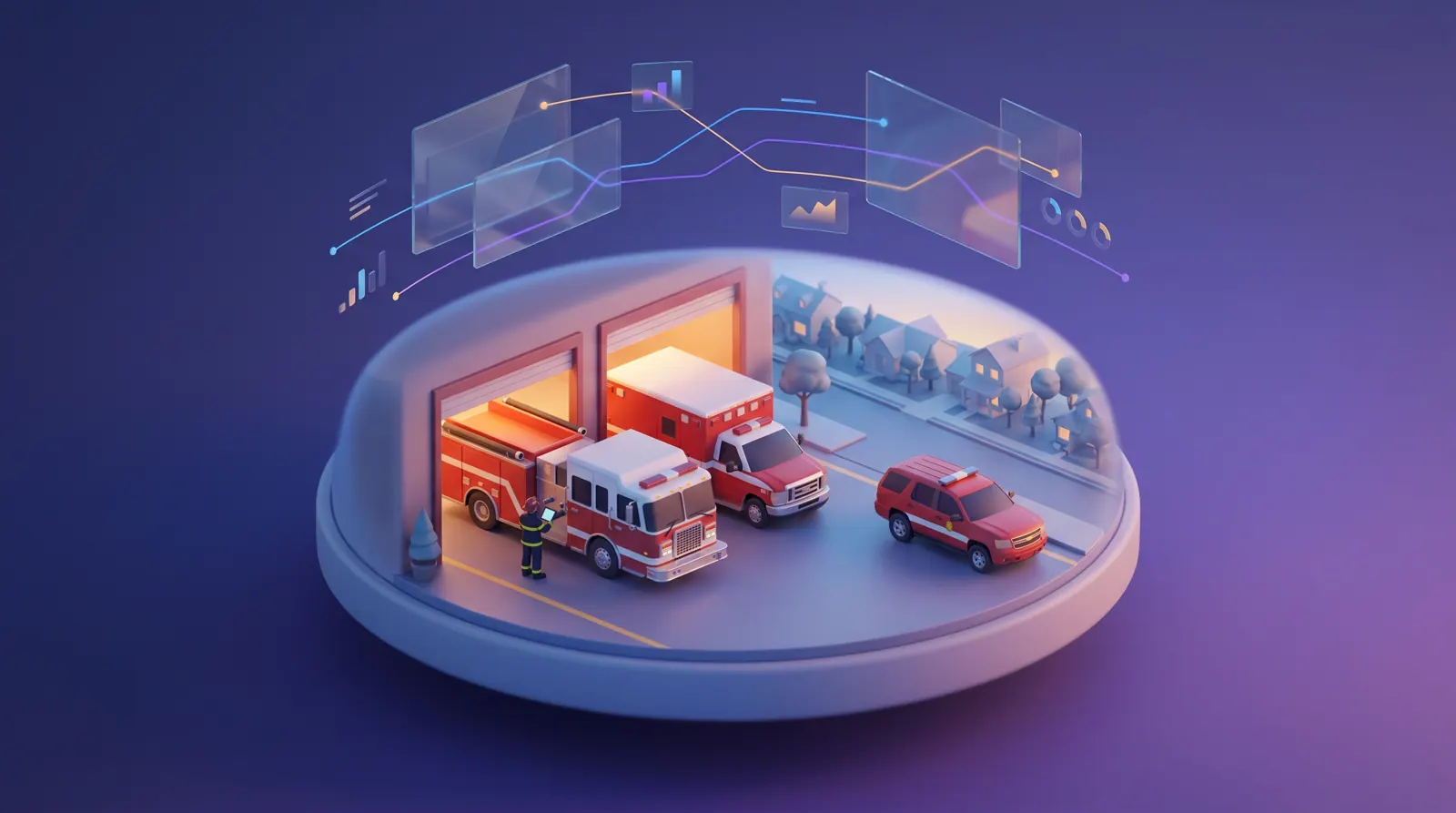
Whether a unit is staffed, in service and warned about the building it is heading to is known somewhere in the department, rarely where dispatch and command need it.
A fire and emergency medical services (EMS) department runs on systems that each do one job well: the computer-aided dispatch (CAD) system the communications center works in, a records system for incident reports, electronic patient care reports, a shift schedule, the fleet shop's work orders and the prevention bureau's inspection files. The trouble sits between them. Whether Engine 4 can pump, whether Medic 9 has a paramedic or whether a building's sprinklers are working is usually known somewhere in the department, just not where dispatch and command make decisions.
Staffing is tight across fire, EMS, patrol and emergency communications. Minimum staffing on 24-hour fire shifts and patrol shifts is held together with overtime and hire-backs, and every credential, from paramedic licenses to driver/operator and telecommunicator certifications, runs on its own renewal clock. Routine questions compete with 911 calls for the same people. County boards and accreditation reviews expect response-time figures they can trust and evidence that last year's improvement items were finished.
Then a major incident brings several agencies together at once: mutual aid companies, deputies closing roads, EMS setting up rehab. Mutual aid crews check in at staging on a clipboard, the communications center cannot see who is waiting, and the after-action review is assembled weeks later from fragments. The solution described here does not replace dispatch, radio or patient records. It connects the readiness information around them.