




AssetHandler
Haul Fleet Component Life Board
Every truck's engine, final drives and tires against planned change-out hours, with the rebuilt unit, the work order and the return time beside each one.
Works with FluidGrids, CrewFoundry
Industry solution
From pit to port, one chain of records every team can act on
Fleet uptime, ticketed crews, reconciled grade, concentrate custody, carbon per ton and route security, on products that work together.

The problem
Mines run on a chain of teams. Truck hours, operator tickets, shift tons, lot assays, fuel use and route stops live apart, so failures, disputed lots and theft show up at month-end instead of at pre-start.
A mine is a chain of stages owned by different teams. Geology predicts the ore, the pit moves it, maintenance keeps the fleet and plant running, the concentrator, tank house or smelter turns it into product, and the commercial team sells it under offtake contracts settled on weights and assays. Each stage keeps its own system, from fleet dispatch and the plant historian to the lab's assay records, the maintenance register and the contract file, and the joins between them are spreadsheets and phone calls.
The pressures are physical and remote. Haul trucks and mills run around the clock, crews rotate on long swings with tickets that lapse, and concentrate travels a long way by road or rail before it meets a ship, exposed to theft, weather and road closures on the way. Buyers and lenders now ask where each ton came from and what carbon it carries, not only how many tons arrived.
The Burdenoff products on this page are each designed to take one stage and pass a specific record to the next: a machine's return time, a shift roster, reconciled grade, a lot with its assays, a carbon figure per shipment, a security case. The page describes a solution concept, not a live deployment.
Mine general manager
One view of fleet availability, crews, reconciled tons and lot custody, without waiting for month-end to learn what went wrong.
Maintenance superintendent and shift supervisors
Component change-outs planned against hour meters, and every available machine matched to an operator ticketed for it before the crew bus leaves camp.
Mine geologist and metallurgist
Tons, grade and contained metal reconciled from model to mill each week, with every gap traced to the shift and stockpile behind it.
Commercial manager
Concentrate lots with weights, moisture, assays and custody on one record, ready for the assay exchange and the buyer's due-diligence questions.
Refinery or cathode plant manager
Tank house rectifiers and pumps on the same maintenance record as the pit, and the power behind each ton of cathode traced for buyers who ask.
Environment and security leads
Carbon per ton of copper traced to fuel and power, and route stops, fence cuts and short deliveries on one security picture.
A day in the life
Ana Lucía runs Corvanna: an open pit, a concentrator, a small cathode plant fed from heap leach pads, and a long road haul to the Harlen Point bulk terminal. Her week turns on a few hundred tons here and a few tenths of a percent of copper there, and on whether the people and machines she needs are ready when the day shift starts at 06:00. This is an illustrative week, told through six problems the solution concept is designed to address.
Monday, 05:30
Ana Lucía's phone rang just before three: a loaded truck had failed on the main ramp and the ramp was closed. By pre-start she wants two answers from maintenance superintendent Tomás Villca: could the failure have been seen coming, and when will the truck be back? He can answer neither without an afternoon in his component spreadsheet, so she resets the day's tonnage plan with three trucks missing and no return times.
How this is solved: Haul trucks lost to component failures nobody scheduledMonday, 06:10
On her way to the pit, Ana Lucía passes the crew bus still standing at the camp gate. Shift supervisor Grace Mwangi is reworking the roster on a tailgate, because the one built on Thursday no longer matches the tickets, the leave calendar or the machines that are actually running. From the office, Ana Lucía cannot tell whether the day started with the right people on the right machines. She finds out at 10:00, when the first hour's tons come in short.
How this is solved: Operators rostered to machines their tickets do not coverTuesday, 10:00
At the weekly production meeting the geologist's model, the truck counts and the mill disagree on how much copper went through the plant, and metallurgist Wei Chen cannot yet say which is right. Henrik Dahl, the commercial manager, owes the buyer next month's concentrate forecast by Friday and asks Ana Lucía which of the three numbers he should trust. She has no way to tell him.
How this is solved: Tons and grade that never agree from pit to millWednesday, 14:00
Henrik brings Ana Lucía a decision. The buyer's outturn weight on the last lot comes in light, and its assay reads lower copper than Corvanna's. An umpire assay costs time and fees; accepting the buyer's figures costs payable copper. Either way, someone first has to rebuild lot 2609-14 truck by truck from weighbridge tickets, moisture samples and delivery notes. By late afternoon the buyer's responsible-sourcing team has added a questionnaire of its own.
How this is solved: Concentrate lots that lose weight and grade between mine and buyerThursday, 09:00
Two letters reach Ana Lucía on the same morning, one from the smelter that buys the concentrate and one from the wire rod mill that buys the cathode, and both ask about carbon. Environment lead Priya Raman walks her through what the site can say today: one annual figure, with no way to split it between the two products or by shipment. Ana Lucía has to decide what Corvanna can put in writing before the next contract round.
How this is solved: Carbon per ton of metal that buyers now ask forFriday, 08:00
Security manager Joseph Banda reads the haulage contractor's overnight log over coffee: a flat tire on the night convoy, logged and closed. Ana Lucía asks whether it connects to the fence cut near the concentrate shed and the short delivery two weeks ago. He thinks it does, but the three reports sit with three different teams, and the next convoy leaves at 22:00 whether he has an answer or not.
How this is solved: Concentrate theft pieced together after the material is goneNone of these problems is new to a mine, and no single system solves them. The solution concept is designed so that the truck's hours, the operator's tickets, the shift's tons, the lot's assays, the shipment's carbon and the convoy's route each live in the product built for them, and reach the next team without a spreadsheet in between.
Challenges and how they are solved
Each challenge shows the problem as it happens, how the products are designed to hand work to each other, and the concepts that illustrate it. Share any challenge on its own.
Answers are in plain business terms. Choose Technical, or open any technical detail, to see how it works under the hood.
Challenge 1 of 6
At the 05:30 pre-start, the pit supervisor learns that three of the eighteen haul trucks are parked. HT-214 lost a final drive on the main ramp at 02:40, loaded, and the recovery blocked the ramp for ninety minutes. Its component card, a spreadsheet the maintenance planner updates on Fridays, shows the final drive 400 hours past its planned change-out; the rebuilt unit sits at the rebuild shop waiting on a seal kit nobody ordered. The fleet dispatch system knew the truck's hours. The maintenance register knew the drive's install date. Nobody saw the two side by side, so the shovel ran short of trucks all night and the mill fed from the run-of-mine stockpile.
A truck lost to an unplanned failure strands a shovel and cuts material moved, and a failure on a ramp is slower and riskier to recover than a planned change-out in the workshop.
AssetHandler is designed to keep each haul truck's engine, final drives and tires on one board, with the hours each has run and when it is due for replacement. FluidGrids passes the truck's hours and fault messages along, so replacements are booked in the workshop before a breakdown, and a truck that does go down shows when it will be back.
Technical detail
AssetHandler keeps every haul truck, excavator and dozer in one register, with its major components (engine, transmission, final drives, wheel motors, tires) tracked as their own records linked to the machine, each with install hours and a planned change-out life. A FluidGrids automation, run on a schedule or per fault message, is designed to take hour meters from fleet dispatch and fault codes from the machine health monitoring system and post them against the right truck in AssetHandler. Usage-based preventive schedules then raise the change-out work order ahead of the component's life, with the rebuilt unit and parts list attached, and a component-life board is designed to rank trucks by what is nearest or past life; predictive maintenance is designed to pull a change-out forward when fault patterns point to early failure. When a truck does go down, its work order is designed to carry a return time the roster and production plan can read.
Component change-outs are planned in the workshop against hour meters instead of discovered on a ramp, and every down truck carries a return time the pit can plan around.
AssetHandler
Every truck's engine, final drives and tires against planned change-out hours, with the rebuilt unit, the work order and the return time beside each one.
Works with FluidGrids, CrewFoundry
AssetHandler
Is designed to rank machines by predicted failure risk with a confidence and a suggested action, so a change-out can be pulled forward before a failure on the ramp.
FluidGrids
Starts the automation designed to post hour meters from fleet dispatch and fault codes from machine health monitoring to AssetHandler, on a schedule or as each fault arrives.
Challenge 2 of 6
Crew C comes on at 06:00 for the first day shift of a seven-day swing. The roster, built in a spreadsheet on Thursday, puts a newly transferred operator on the 250-ton excavator; his verification of competency (VOC) covers haul trucks only. A water-cart operator is on approved leave the roster never picked up, nobody on the crew is ticketed for the spare dozer, and a fitter is on his thirteenth consecutive shift because he covered for a colleague. The supervisor fixes it on the tailgate with a clipboard while two trucks stay parked.
Parked machines at shift start cost the first hour of the day, and an operator on a machine outside their tickets is a risk the supervisor has to catch before the shift starts.
CrewFoundry is designed to build the shift roster from each person's tickets, leave and shifts worked, and to flag anyone put on a machine their tickets do not cover. AssetHandler says which trucks and excavators are down, so nobody is rostered to one, and the supervisor can fix the gaps from a phone before the bus leaves camp.
Technical detail
CrewFoundry is designed to keep each worker's tickets, verifications of competency and site induction as certificates with expiry dates on their profile, next to approved leave and hours from their time entries. AssetHandler is designed to supply the other half of the roster: which trucks, excavators, dozers and water carts are available for the shift and which are down, with return times, so nobody is rostered to a machine in the workshop. A pit roster board in CrewFoundry is designed to take that machine list, match each operator to a machine class they hold a current VOC for, show leave and consecutive shifts worked, and flag mismatches, unfilled seats and long runs of shifts with ticketed alternatives from the crew or the standby pool. A phone view is designed to let the supervisor confirm or swap assignments before the bus leaves camp, and the published roster goes to the crew.
Supervisors start the shift with every available machine matched to a ticketed operator, and leave, long runs of shifts and unfilled seats are caught before the bus leaves camp.
CrewFoundry
The next shift's machines matched to operators ticketed for them, with leave, shifts in a row and ticketed alternatives for every gap.
Works with AssetHandler
CrewFoundry
The time entries and approved leave the pit roster is designed to read, so hours worked and days away sit on the board instead of in someone's memory.
AssetHandler
The source of each machine's available or down status and return time, which the roster is built around.
Works with FluidGrids, CrewFoundry
Challenge 3 of 6
At month-end reconciliation, the resource model says the mined blocks carried 0.64% copper, truck counts from fleet dispatch put mined tons several percent above the survey, the mill's belt weigher reports feed tons that match neither, and metal in concentrate implies a head grade lower than all of them. The mine geologist and the metallurgist each keep a spreadsheet built from exports of the dispatch system, the weightometer historian, the lab's assay reports and the survey. By the time they agree on which number is wrong the month has closed, and the commercial team has already given the buyer a concentrate forecast built on one of them.
When tons and grade do not reconcile, nobody can say whether the gap sits in the model, dilution at the face, the belt scale or the mill, and the concentrate forecast rests on the least reliable number.
FluidGrids is designed to gather truck loads, belt weights, mill feed, lab results and crew hours after every shift. BigConsole shows one board of tons and copper grade at each step from the pit to concentrate, with the gap at each step and the shift behind it. The agreed month then goes to TheGlobalFuel, so the forecast given to the buyer rests on it.
Technical detail
FluidGrids workflows are designed to collect each shift's truck loads from fleet dispatch, belt-weigher tons and mill feed from the plant historian, assay results from the lab, and operator and machine hours from CrewFoundry, and post them into BigConsole datasinks, the built-in link between the two products. A BigConsole reconciliation console is designed to join those datasinks in a pipeline and show tons, grade and contained copper at each stage, from the model's prediction through grade control, truck counts and mill feed to metal in concentrate, with the factor between each pair of stages and a drill-down to the week, shift, trucks and stockpile behind a gap. Once geology and processing agree on the month, the reconciled tons and grade are designed to be recorded in TheGlobalFuel as production against the mine, so the concentrate forecast rests on them. Cited explanations of what changed are planned.
Geology, mining and processing work from one reconciliation each week instead of four spreadsheets each month, and the concentrate forecast rests on reconciled grade.
BigConsole
Tons, grade and contained copper at each stage from model to concentrate, with the factor between stages and the shift or stockpile behind each gap.
Works with FluidGrids, TheGlobalFuel
FluidGrids
Ends each collection workflow in a datasink node, so dispatch, plant and lab figures are designed to land in BigConsole on a schedule without anyone exporting them.
Challenge 4 of 6
Lot 2609-14, a little over 3,000 wet metric tons of copper concentrate, left the filter shed in 104 truckloads over four days. The mine's weighbridge tickets are in one system, the moisture samples in the lab's workbook, the haulage contractor's delivery notes in an inbox and the port's stockpile survey in a PDF. When the buyer's outturn weight at the discharge port comes in light and its assay reports copper 0.4 percentage points below the mine's, the commercial manager has to rebuild the lot truck by truck to decide whether to call for an umpire assay, while the final invoice waits. The same week, the buyer's responsible-sourcing team sends a questionnaire asking which mine, lot and route each ton came from.
Weight and assay differences on concentrate are settled in money, and a lot whose custody cannot be shown truck by truck weakens the seller's position in the assay exchange and in the buyer's due diligence.
TheGlobalFuel is designed to keep each concentrate lot with its weights, moisture and lab results, and every truckload sent against it. MoveTheWheels books the trucks, and a planned driver app lets drivers photograph weighbridge tickets and delivery notes. When the buyer's weights or lab results differ, the whole trail is on one page, ready for the assay exchange or the buyer's questions.
Technical detail
TheGlobalFuel records each concentrate lot as an inventory lot with its tons and grade, and a lot custody view is designed to add wet and dry weights, moisture and element assays at every weighing point, from the mine weighbridge to the buyer's outturn. Each truck, rail or vessel movement is a shipment drawn against the lot and the offtake contract it serves. MoveTheWheels runs the road haul, with the contractor's dispatchers and drivers invited in under a contractor role: dispatch, truck and driver assignment, tracking events, and a planned driver app designed to capture photo and signature proof of weighbridge tickets and delivery notes. Those consignment records are designed to hand back to TheGlobalFuel, where the custody view compares the mine's and buyer's assays against the contract's splitting limit and flags when an umpire assay is needed. The same records assemble the chain of custody the buyer asks for, from pit to lot to vessel.
Every lot carries its weights, moisture, assays and consignments on one record, so an assay exchange or a due-diligence request is answered from the file rather than rebuilt.
TheGlobalFuel
One lot's weights and moisture at every weighing point, the seller's and buyer's assays against the splitting limit, and the truck consignments that built it.
Works with MoveTheWheels, EcoImpactHub
MoveTheWheels
A planned driver app that gives drivers each consignment's stops and is designed to capture photo and signature proof of weighbridge tickets and delivery notes.
Challenge 5 of 6
Two customers now ask the same question in different units. A smelter's new offtake schedule wants the carbon footprint of each concentrate shipment per metric ton of contained copper, and the wire rod mill that buys cathode from the site's solvent extraction and electrowinning (SX-EW) plant wants a figure per ton of cathode. The environment lead has an annual inventory built from fuel invoices and a yearly electricity total. Haul diesel is dispensed at the fuel farm, where the dispensing system logs each issue by truck but nobody uses it; mill and tank house power sit in one utility bill; and nothing ties either to the tons in a lot. She can give last year's site average. She cannot split it by product or shipment, or show whether the mill's new variable-speed drives changed anything.
Without a per-ton figure traced to fuel, power and production, the site answers buyers with an annual average and cannot show which assets or changes move the number.
FluidGrids is designed to pass the fuel issued to each truck and the power used by the mill and cathode plant into EcoImpactHub, which turns them into carbon figures with their sources and divides them by the tons TheGlobalFuel recorded. That gives carbon per ton of copper for each shipment, with estimates marked, and AssetHandler shows which machines use the most energy.
Technical detail
AssetHandler holds the energy-using assets, from haul trucks and the fuel farm to the SAG and ball mills, flotation cells and tank house rectifiers, and its ESG view reads EcoImpactHub metrics, an existing link between the two products. FluidGrids is designed to carry the dispensing system's per-truck fuel issues and electricity sub-meter readings into EcoImpactHub's carbon ledger as Scope 1 and Scope 2 activity lines, each with its emission factor. EcoImpactHub is designed to divide those emissions by the tons recorded in TheGlobalFuel, giving carbon per ton of contained copper in concentrate and per ton of cathode, by month and by shipment, split by stage and with estimated lines marked. The per-shipment figure and its sources are designed to be attached to the lot record in TheGlobalFuel, so the declaration travels with the lot the buyer receives.
The site can give each buyer a carbon figure per ton of copper, in concentrate or cathode, for each shipment, with the fuel, power and production lines behind it, and see which assets move it.
EcoImpactHub
Carbon per ton of copper in concentrate and cathode, by stage and by shipment, built from haul diesel, mill and tank house power, with estimated lines marked.
Works with TheGlobalFuel, AssetHandler, FluidGrids
AssetHandler
Energy use ranked by asset beside maintenance, so the mills, rectifiers and haul trucks that drive the footprint are visible to the people who run them.
TheGlobalFuel
The lot record that supplies each shipment's tons and contained copper, and where the per-shipment carbon figure is attached for the buyer.
Works with MoveTheWheels, EcoImpactHub
Challenge 6 of 6
At 23:10 a concentrate truck on the night convoy to the port stops for forty minutes on a gravel spur off its planned route. The haulage contractor's control room sees it on its own tracking screen and phones the driver, who reports a flat tire. Nobody tells mine security. The same evening a patrol recorded a cut in the lease fence near the concentrate shed, and two weeks earlier a truck from the same contractor reached the port with a broken seal and a load more than a ton light. Each incident sits in a different log: the contractor's, the patrol book and the port's discrepancy report. The security manager connects them only when the lot comes up short.
Theft and substitution of concentrate rarely look serious one truck at a time. When route stops, fence breaches and short deliveries sit in separate logs, the pattern is recognized only after the material is gone.
MoveTheWheels is designed to spot a concentrate truck that stops off its route or arrives with a broken seal or a light load. FluidGrids passes that to IntelWatchtower, which puts it on one map with patrol reports and fence alarms, so repeats stand out and an investigation can be opened. TheGlobalFuel holds the affected load until it is weighed and sampled again.
Technical detail
The haulage contractor's dispatchers and drivers are invited into MoveTheWheels under a contractor role. MoveTheWheels is designed to take their GPS positions, passed on by a FluidGrids automation, and raise an exception when a truck stops off its route, overstays a stop, or arrives with a seal or weight that does not match its loading record. A second FluidGrids automation is designed to pass each exception into IntelWatchtower as an observation, beside patrol reports and perimeter alarms on one site security picture. IntelWatchtower is designed to link the truck, driver, location and earlier events as entities and raise an alert when the pattern repeats, opening a case with a timestamped journal and the evidence attached. TheGlobalFuel is designed to hold the affected consignment on its lot record until it is reweighed and resampled at the port.
Route stops, seal breaks, fence cuts and short deliveries land on one picture as they happen, and a repeat pattern becomes a case with evidence before the next convoy leaves.
IntelWatchtower
The one-map, one-timeline picture of perimeter alarms and patrol reports, designed to take route exceptions for the mine gate, sheds and haul road, so a repeat pattern can be opened as a case.
MoveTheWheels
Delays and breakdowns on one board, designed to add off-route stops, overstays and seal or weight mismatches for each concentrate consignment.
How it fits together
Follow one shift-to-shipment cycle through the solution concept. Each step shows one product doing one job and passing a specific record, such as a machine's return time, a shift roster or a lot's shipped tons, to the product that needs it next. Of the hand-offs in this flow, only FluidGrids feeding BigConsole is built in today; the rest show how the products are designed to work together.
To CrewFoundry: Which machines are ready for the next shift
To FluidGrids: Who ran which machine, and for how long
To BigConsole: The shift's tons, grades and hours
To TheGlobalFuel: Agreed tons and grade for the month
To EcoImpactHub: Tons of copper shipped in each lot
To TheGlobalFuel: The carbon figure for each shipment, with its sources
To IntelWatchtower: Suspicious stops and broken seals, with truck and driver
Step 1 of 8: Keep the fleet running
Technical detail
Products in this solution
Lots, assays, offtake and chain of custody
It keeps each lot of concentrate with its tons and grade, the contracts it is sold under and every load sent, so the trail from pit to ship sits on one record.
Technical detail
Built for the resources value chain: inventory lots with grade, shipments by truck, rail and bulk vessel, offtake contracts and chain of custody on connected records, so a concentrate or cathode lot can be followed from pit to ship and settled against its contract.
Haul fleet and plant maintenance
It keeps every truck, excavator, crusher and mill with its service plan, repair jobs and costs, so parts can be replaced on schedule instead of after a breakdown.
Technical detail
A register of every truck, excavator, crusher, mill and tank house rectifier with usage-based preventive schedules, work orders with parts lists, service history and repair-or-replace costs, plus an ESG view that reads EcoImpactHub metrics.
Shift rosters and tickets
It is designed to show who holds which ticket, who is on leave and how many hours each person has worked, so a roster can be checked before the shift.
Technical detail
One record of employees, contractors and field crew with skills, certificates, leave and time entries, which a pit roster checked by ticket, leave and shifts worked depends on.
Mine-to-mill reconciliation console
It puts figures from the trucks, the plant and the lab on one board, so geology, mining and processing can agree on the month's tons and grade.
Technical detail
Consoles over datasinks joined by pipelines, fed by FluidGrids, suit a reconciliation that must line up dispatch, plant, lab and survey figures stage by stage with drill-down to the shift.
Carries figures between site systems
It is designed to pass figures and alerts from the site's existing systems to the right product automatically, so nobody retypes a truck's hours or a shift's tons.
Technical detail
Visual workflows with schedule and webhook triggers, and the built-in datasink link into BigConsole, are designed to carry figures that fleet dispatch, historians, the lab and fuel meters send or expose to the product that uses them.
Carbon per ton of metal
It turns fuel and electricity into carbon figures with the source behind each line, the base for working out carbon per ton of copper for each shipment.
Technical detail
A Scope 1, 2 and 3 carbon ledger with sourced emission factors, verification status and framework reports, which is the base for a per-ton footprint of concentrate and cathode that a buyer can trace line by line.
Concentrate haulage to the port
It runs the trucks that carry concentrate to the port, follows each load and is designed to flag one that goes wrong.
Technical detail
Dispatch, drivers, shipments with tracking timelines and exception alerts, with a planned driver app for photo and signature proof, suited to a contracted road haul of concentrate from the mine to a port.
Site and haul-route security picture
It puts truck stops, patrol reports and fence alarms on one map and keeps a record of each investigation.
Technical detail
Sources, observations, entities, alerts and cases on a common operating picture, suited to joining route exceptions, patrol reports and perimeter alarms into one security view with a case trail.
Every product here runs on Burdenoff Workspaces: one sign-in for staff and contractors, role-based access so a haulage contractor or buyer sees only what their role allows, one audit trail of who changed what across maintenance, rosters, lots and cases, and one bill.
Concept gallery
13 concepts from 8 products. Each one links to its own page on the product's website, and every view has a link you can share.
AssetHandler
Every truck's engine, final drives and tires against planned change-out hours, with the rebuilt unit, the work order and the return time beside each one.
Works with FluidGrids, CrewFoundry
AssetHandler
Is designed to rank machines by predicted failure risk with a confidence and a suggested action, so a change-out can be pulled forward before a failure on the ramp.
FluidGrids
Starts the automation designed to post hour meters from fleet dispatch and fault codes from machine health monitoring to AssetHandler, on a schedule or as each fault arrives.
CrewFoundry
The next shift's machines matched to operators ticketed for them, with leave, shifts in a row and ticketed alternatives for every gap.
Works with AssetHandler
CrewFoundry
The time entries and approved leave the pit roster is designed to read, so hours worked and days away sit on the board instead of in someone's memory.
BigConsole
Tons, grade and contained copper at each stage from model to concentrate, with the factor between stages and the shift or stockpile behind each gap.
Works with FluidGrids, TheGlobalFuel
FluidGrids
Ends each collection workflow in a datasink node, so dispatch, plant and lab figures are designed to land in BigConsole on a schedule without anyone exporting them.
TheGlobalFuel
One lot's weights and moisture at every weighing point, the seller's and buyer's assays against the splitting limit, and the truck consignments that built it.
Works with MoveTheWheels, EcoImpactHub
MoveTheWheels
A planned driver app that gives drivers each consignment's stops and is designed to capture photo and signature proof of weighbridge tickets and delivery notes.
EcoImpactHub
Carbon per ton of copper in concentrate and cathode, by stage and by shipment, built from haul diesel, mill and tank house power, with estimated lines marked.
Works with TheGlobalFuel, AssetHandler, FluidGrids
AssetHandler
Energy use ranked by asset beside maintenance, so the mills, rectifiers and haul trucks that drive the footprint are visible to the people who run them.
IntelWatchtower
The one-map, one-timeline picture of perimeter alarms and patrol reports, designed to take route exceptions for the mine gate, sheds and haul road, so a repeat pattern can be opened as a case.
MoveTheWheels
Delays and breakdowns on one board, designed to add off-route stops, overstays and seal or weight mismatches for each concentrate consignment.
Pitch kit
A mine runs on a chain of teams: pit, maintenance, plant, commercial, environment and security, each with its own system and spreadsheets in between. Burdenoff's solution concept gives each stage a product built for it, from AssetHandler for the haul fleet and CrewFoundry for rosters and tickets to TheGlobalFuel for concentrate lots and offtake, and is designed to pass each record to the next team, so problems surface at pre-start instead of at month-end.
Questions
No. Your existing systems stay. FluidGrids is designed to pick up figures from them automatically and pass them to the product that needs them, so people stop retyping them.
Technical detail
No. The solution concept assumes they stay. FluidGrids workflows are designed to take the figures that systems such as fleet dispatch, the plant historian, lab records and the fuel dispensing system send or expose, on a schedule or as messages arrive, and pass them to the product that uses them. BigConsole receives them through its built-in datasink link from FluidGrids.
No. The products are not launched yet, and this page shows how they are designed to work together. Two of the links shown exist between the products today; the others are designed to be set up by your team in FluidGrids and each product's settings.
Technical detail
No. Burdenoff's products are pre-launch, and this page describes a solution concept: how the products are designed to work together for a mine or metals plant. Of the hand-offs shown, the links that exist between the products today are FluidGrids feeding BigConsole datasinks and AssetHandler reading EcoImpactHub metrics; the others describe how the products are designed to work together, configured by your team in FluidGrids and each product's settings.
Largely, yes. The same products are designed to cover smelters and metal plants: furnaces and mills in AssetHandler, plant crews in CrewFoundry, metal lots in TheGlobalFuel and carbon per ton of metal in EcoImpactHub. The pit-to-mill and trucking parts are the most mine-specific.
Technical detail
Largely, yes. The carbon figures on this page already cover a cathode plant. TheGlobalFuel models processing plants and refineries as assets and refined metal as inventory lots, AssetHandler maintains furnaces, potlines, casters and mills like any other asset, CrewFoundry is designed to roster plant crews, and EcoImpactHub's per-ton footprint applies to cathode, ingot or billet as well as concentrate. The pit-to-mill reconciliation and road haul steps are the most mine-specific.
No product can guarantee that. CrewFoundry is designed to show who holds which ticket, who is on leave and how many hours each person has worked, and to flag gaps early. Your site's rules and supervisors stay in charge.
Technical detail
It cannot guarantee that. CrewFoundry is designed to make tickets, verifications of competency, leave and hours worked visible and to flag gaps before a shift starts. It does not decide what a jurisdiction requires or replace your safety management system and competent supervisors, who remain the authority on site.
No. Each product keeps its own name. You set up roles, fields and views to fit your site, and the contractors or buyers you invite see only what their role allows.
Technical detail
No. Each product is offered under its own name. You configure roles, fields, rosters and views to your site's process, and contractors or buyers you invite see only what their role allows, such as a haulage contractor's own consignments or a buyer's custody pack.
No. Each product works on its own. Start with the part that hurts most, such as truck maintenance or concentrate lots, and add more later, with one sign-in and one bill across them.
Technical detail
No. Each product works on its own, and all of them run on Burdenoff Workspaces, which gives one sign-in, one set of roles, one audit trail and one bill across the products a site uses. Many sites would start with the stage that hurts most, such as the haul fleet or concentrate lots, and add the next product when the hand-off is needed.
Related domains
 Industry & Operations
Challenges solved
A cross-product solution concept for oil and gas, mining, renewables and utilities: equipment reliability, cargo readiness, methane and water compliance, site security and turnaround crews.
 Industry & Operations
Challenges solved
A solution concept for discrete and batch plants: ManufacturedOps with AssetHandler, CrewFoundry, MoveTheWheels and EcoImpactHub, connected by automation and analytics.
 Industry & Operations
Challenges solved
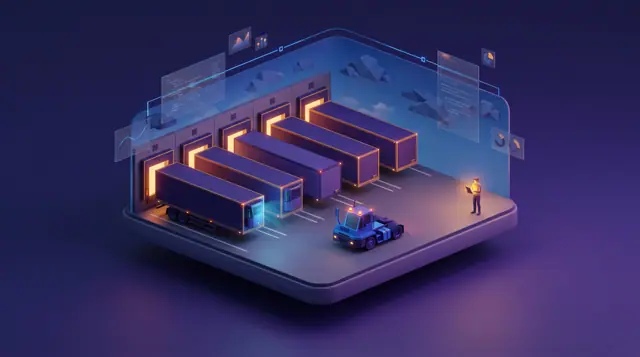
A solution concept for 3PLs, carriers and shippers in which seven Burdenoff products are designed to work together, from carrier status to report card.
Tell us about your setup. We will walk you through the products involved and scope a pilot around the challenge that hurts most.
This is a solution concept: it shows how Burdenoff products are designed to work together in this industry. The images are illustrations of the concepts, not screenshots of the actual products, and every name and figure in them is sample data.

