Arrival changes come by email, crane faults surface mid-discharge, truckers call to ask whether a box is released, crew certificates sit in binders, and emissions and security live in separate logs. One late ship pushes into the next ship's window.
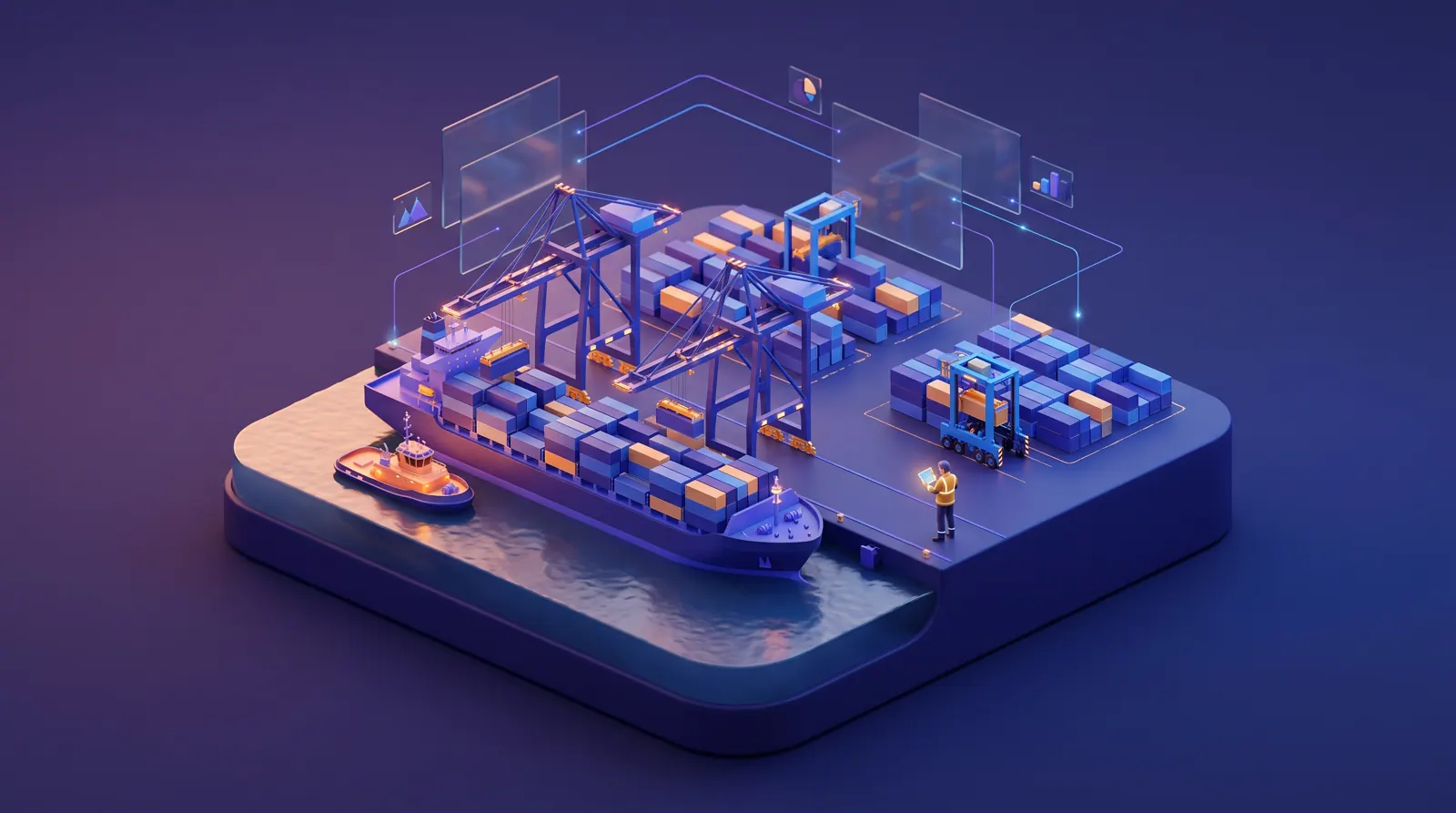
A port is a meeting point for organizations that do not share a system. Shipping lines and their agents send berth requests and arrival updates through the port community system, by email and by message, pilots and tug masters work from the harbor master's schedule, the terminal plans cranes and gangs in its own operating system, customs and lines release boxes in theirs, and truckers find out at the gate. When a ship runs late at its previous port, the change reaches the berth planner, the gangs, the tugs and the gate at different times, or not at all.
The equipment is heavy, costly and shared. One ship-to-shore crane fault can stretch a vessel's stay, push the next ship to wait at anchor and leave a lashing gang paid to stand by. Operating hours, fault histories and service plans often sit in a separate maintenance tool or a spreadsheet the engineering office updates at shift end, so the berth plan is built on cranes that may not be working.
Pressure also comes from outside the fence. Lines want berth productivity and dwell figures they can check, neighbors and authorities ask what the port puts into the air while ships sit at berth, inspectors check crew certificates on board, and the port facility security plan expects every alarm and access event to be followed up and recorded. Answering each of these from a different spreadsheet takes the same people away from running the port.