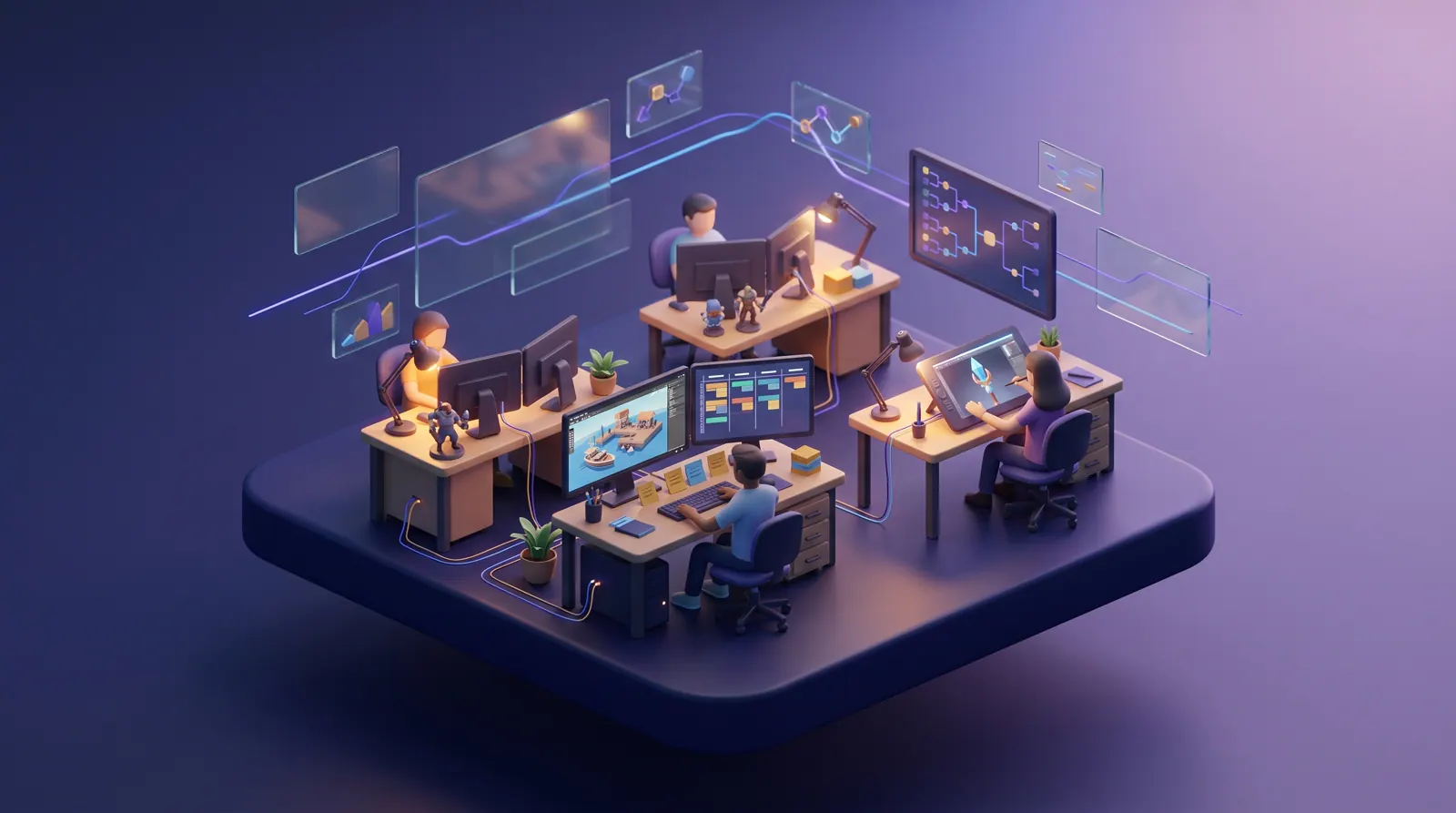
In a game studio the milestone plan, the build machines, outsource feedback, live event health, player support and the community live in separate tools, so a broken build, a crunch-bound plan or a live incident is noticed late.
A game studio today is often two businesses at once. The live game ships a season every few months, with patches, events and store updates in between, while the same people build the next season or expansion against publisher or internal milestones. Builds come in nightly for several platforms, every console patch has to pass the platform holder's certification, and mobile builds go through store review, on a schedule that rarely moves for anyone.
Much of the work happens outside the building. Outsource partners deliver art in batches, co-development and QA partners work in their own tools, and feedback travels as annotated screenshots in chat. Players are part of the process too: closed playtests, community servers, creators and community tournaments all produce signal that has to reach designers while it still matters.
Behind it all sits the question the industry keeps returning to: how to ship without crunch. Long hours rarely start as a decision. They start as a milestone plan that assumes every discipline at full capacity, a live incident that eats a weekend, or a vendor rework round nobody planned for. Studios that see those signals early can cut scope calmly; studios that see them late pay in burnout and turnover.