Operators run remote, costly assets on scattered systems. Trips, leaks, stockpiles, permits and crew certifications live in different tools, so problems reach the people who can act on them days late.
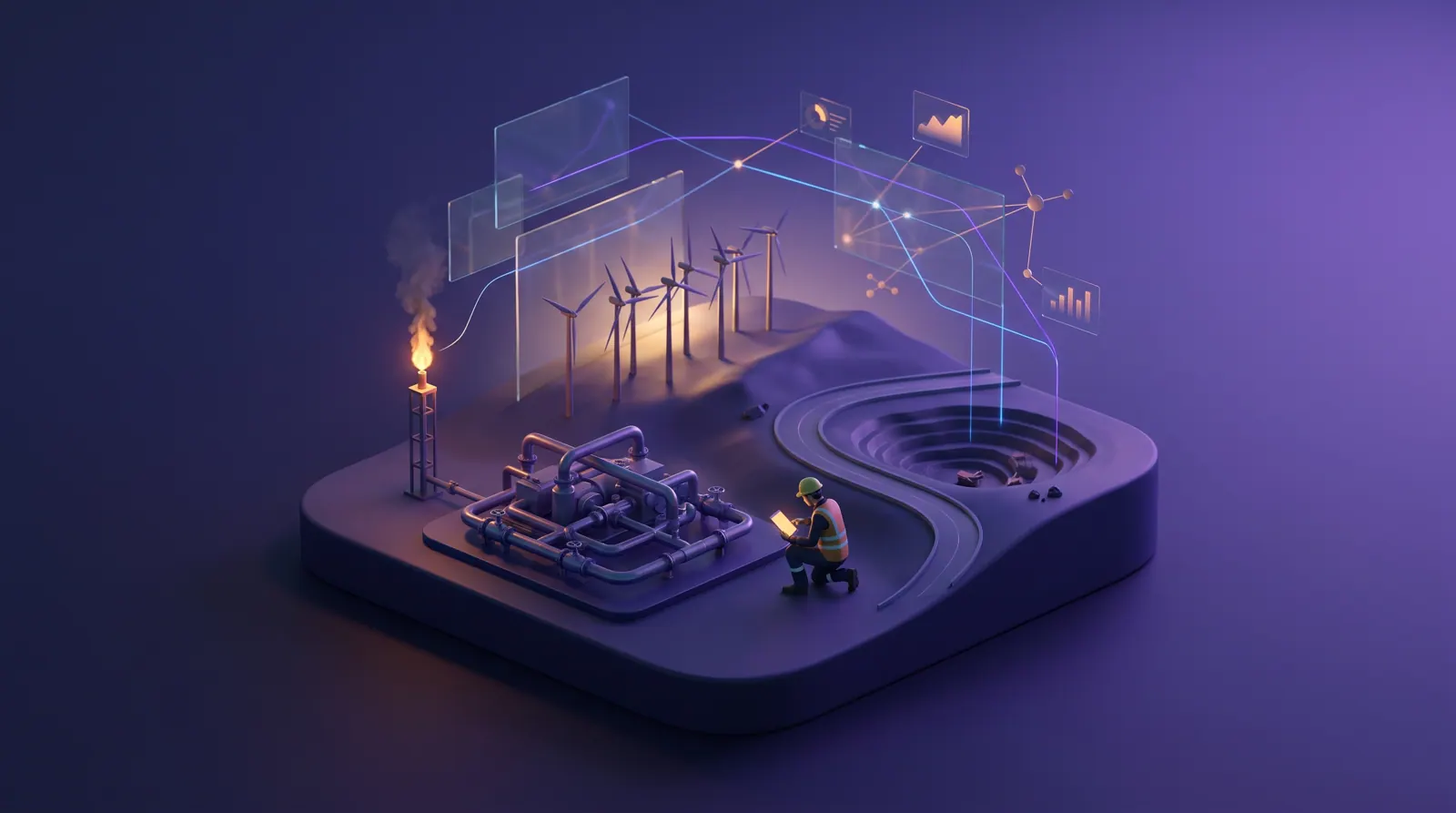
Energy, mining and utility operators run physical assets that are spread out, remote and expensive to stop. A compressor station, a concentrator or a substation can sit hours from the nearest office, and the information about it is just as scattered: sensor history in a historian, downtime in a spreadsheet, maintenance in a separate system, contracts in email and permits in PDFs. Every team keeps its own version of the truth, and the numbers only meet at month-end.
The pressures pull against each other. Operations wants uptime; the commercial desk has cargoes nominated against output that has not been produced yet; environment teams face rising expectations on methane, flaring and mine water; security teams watch remote sites that attract theft and intrusion, on OT networks that need as much care as IT. The energy transition adds wind, solar and new minerals to portfolios built around a single commodity.
What is missing is less another point tool than a shared operating record: one place where a trip, a leak, a stockpile, a lapsed certification and a fence cut are logged once, tied to the asset they belong to, and handed to the team that has to act. That is the gap this solution concept is designed to close.